
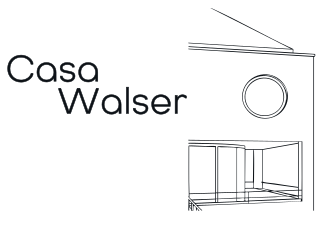
From the outside, the house looks closed. A footbridge leads from the village to the upper floor. So you enter the house at the top. From there you move down, level by level, with views out over the valley.
Truthfulness
“Nature tolerates nothing but the truth,” Snozzi said. The house takes this literally. No chalet, no folklore. Concrete, glass and steel show themselves as they are.
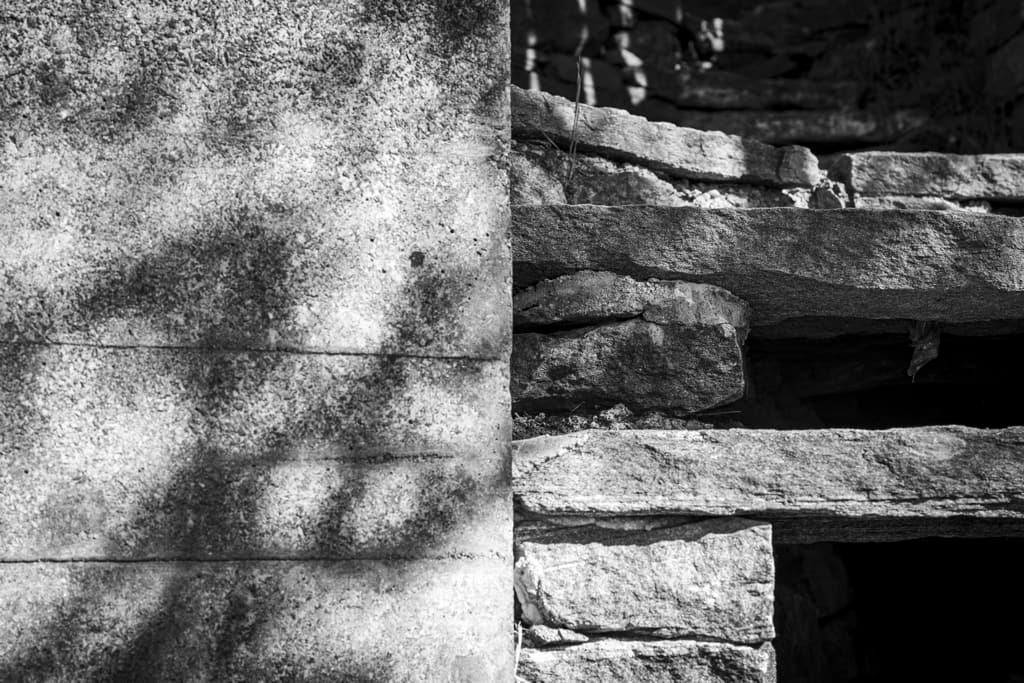
The concrete takes in the light. Black steel frames outline the openings. The house holds its own on the slope without imposing itself. Snozzi decorated nothing and hid nothing.
Framed Views
The windows are not panoramic glazing. They show sections: the village, the slope, the pergola, the valley.
On the upper floor, a gallery runs around the open void. Three round windows look out in three directions. In 1990, the magazine “Häuser” wrote that here you see the landscape as if through binoculars.
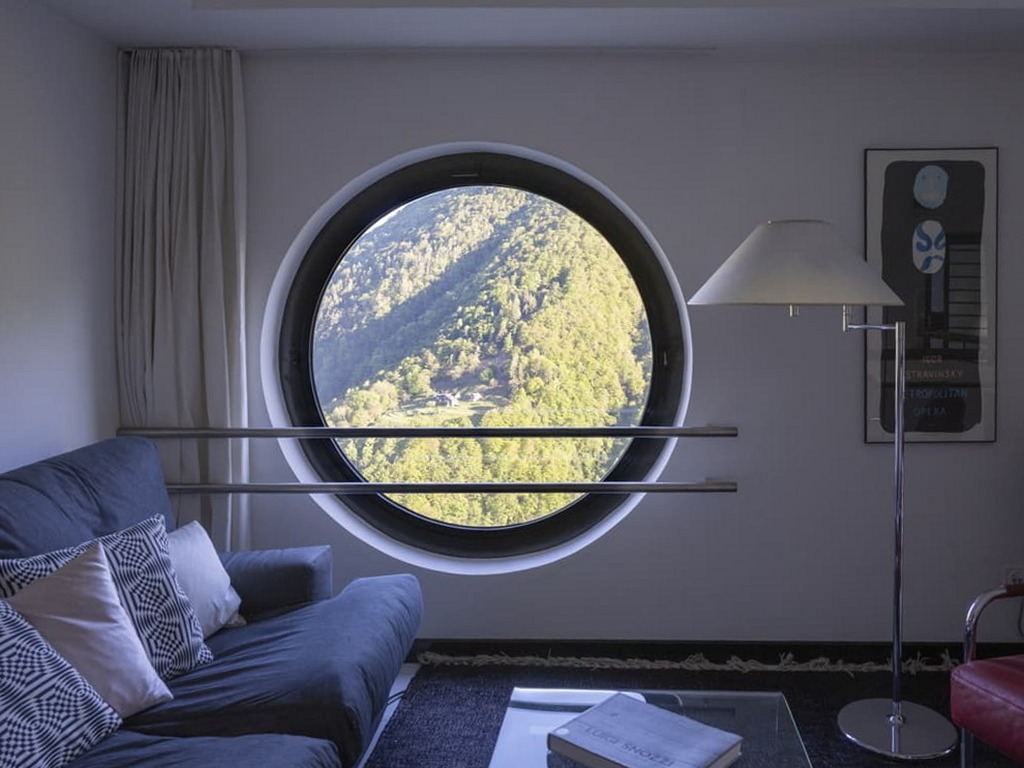
One level down, the view opens wide. The loggia faces the valley through semicircular glazing. The dining table stands in front of it. From here, a path leads to the pergola between the vineyard terraces.
Black and White
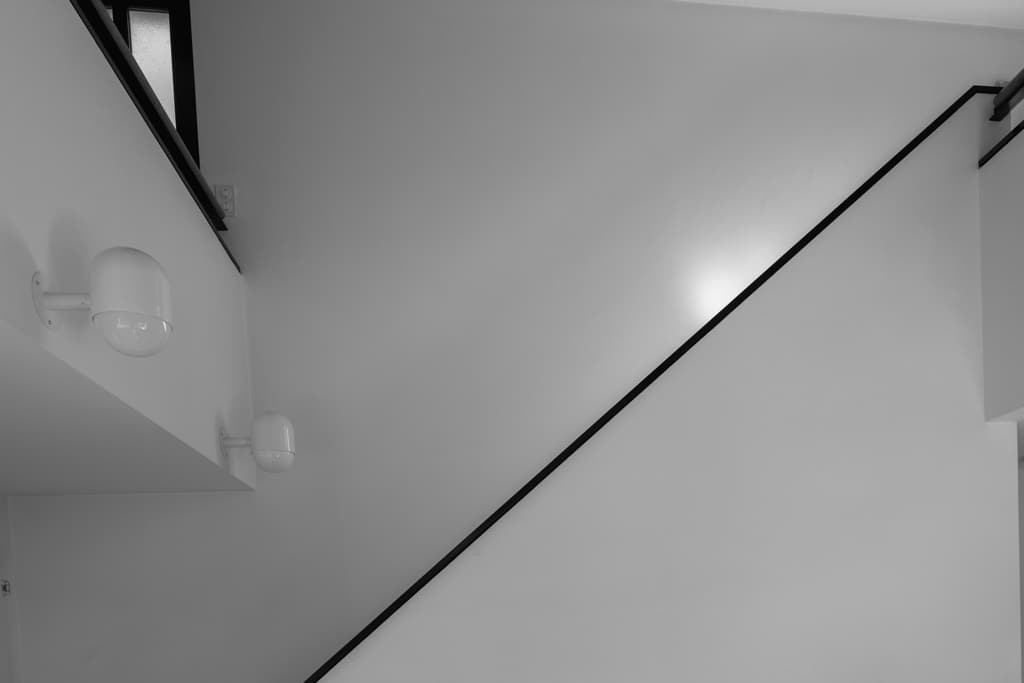
Inside, the house is strictly black and white. White walls, white ceramic floors, black frames and doors.
With Italian design furniture from the 1980s.
Colour appears only in the bedrooms at the back: green, pink and blue, after Le Corbusier.
Concrete and Fire
The Valle Onsernone is quiet and headstrong. The house reflects this without becoming austere. In winter, the underfloor heating is on. In the kitchen, an open fire burns, as in old Ticino houses.
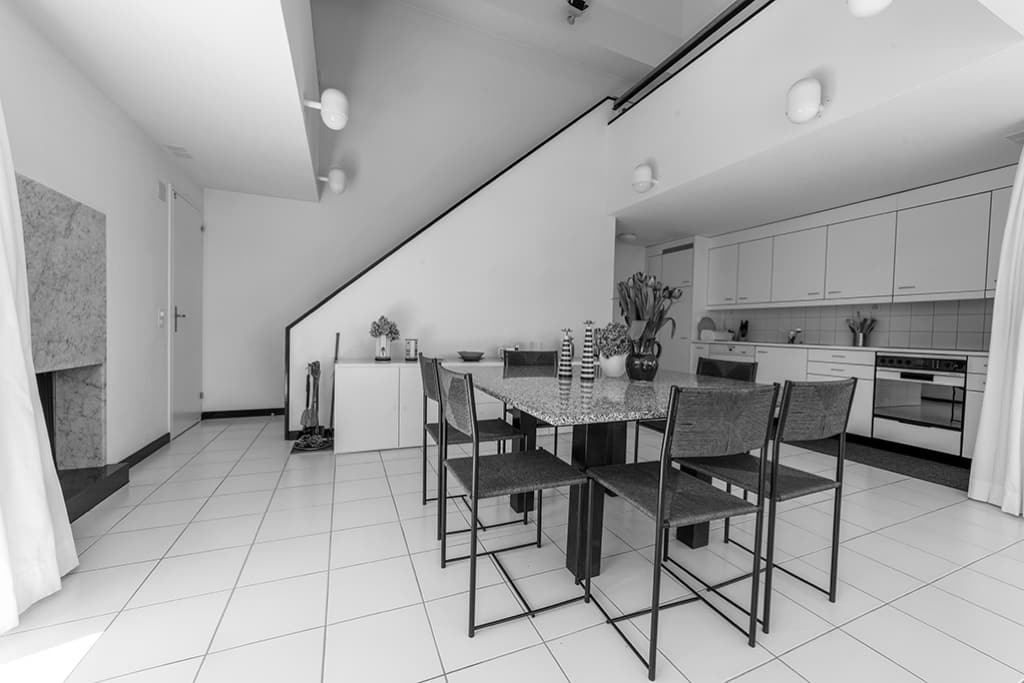
Exposed concrete outside, fire and a laid table inside. The two belong together.
After a few days, you understand the house.
Not because it explains itself, but because you have lived in it.